
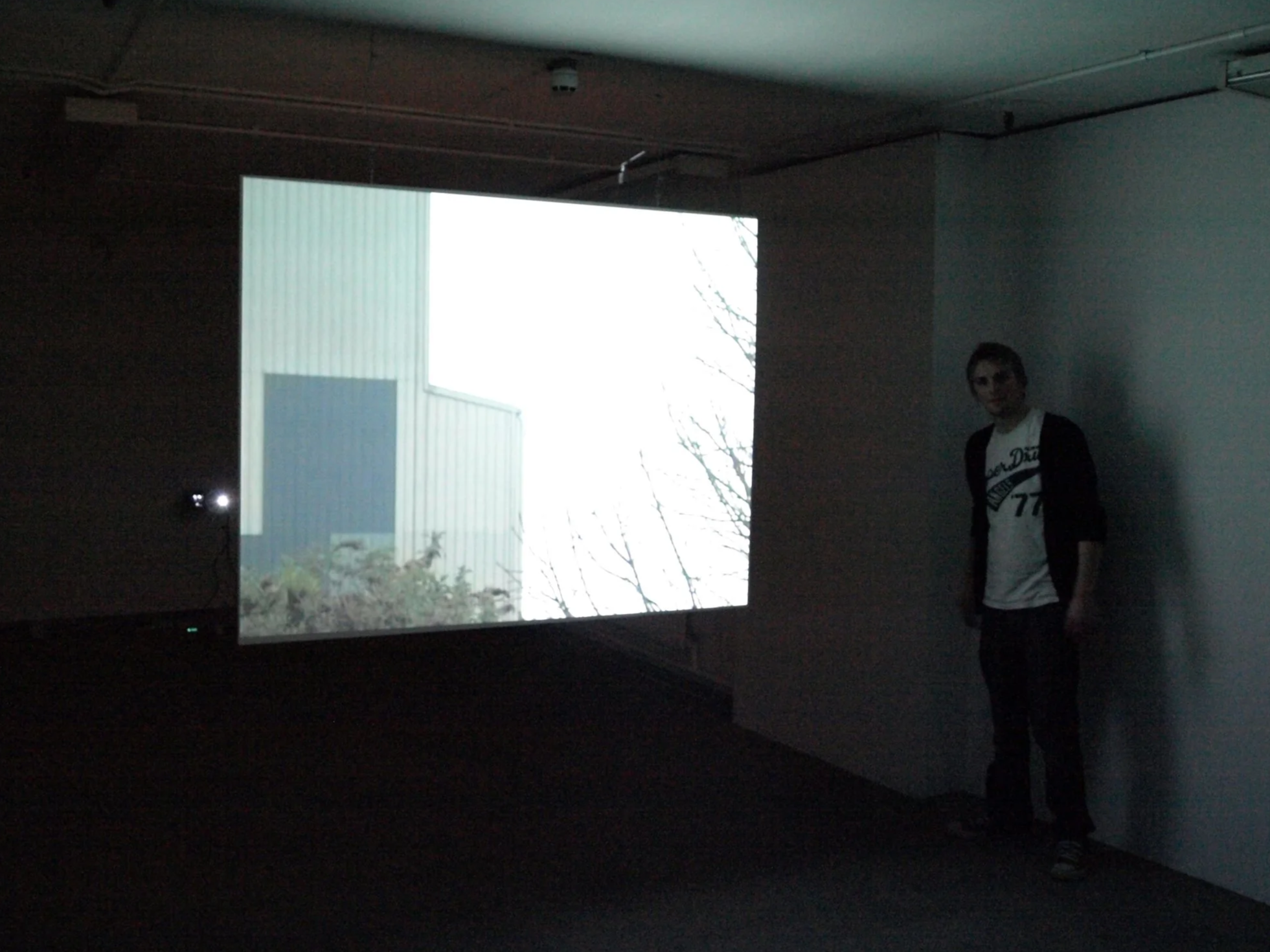
The artist formerly known as lens-based. Beside his video installation “Milewater” at the 2009 Degree Show.
I read an interesting substack yesterday written by the curator Anna Moss called, “The Problem with Painting Photographs”, and although agreeing wholeheartedly with it, I can’t deny it touched some nerves. As a painter with a background in lens based art, who paints with acrylic and not oils, and often uses reference photos, it’s fair to say I have some nerves that are easily touched.
It also amazed me to find that, 20 years since my interest in Thomas Demand and this topic as a student, the relationship between photography and art, or representational painting at least, is part of the zeitgeist again. All the discourse about the saturation of mass media images, and the proliferation of digitally altered images in the early noughties seems charmingly naive now in the age of ai generated images and deepfake technology.
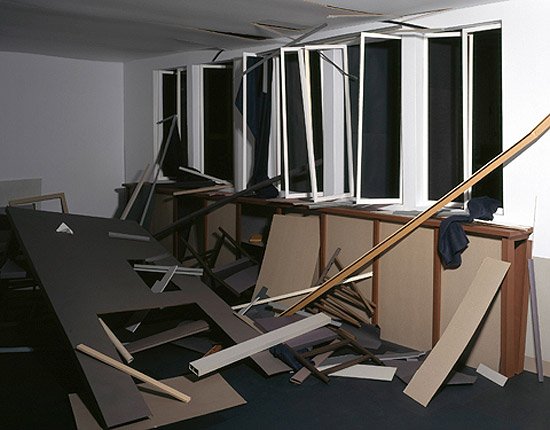
Thomas Demand, “Room, 1994”
I mentioned in my previous post that, since beginning to skirt around the edges of the art world again in recent years, I had been forced to write a few artist statements. I often found myself writing about photographs in these statements, as they are an integral part of my practise, unaware the art world is currently yawning and sighing at anyone still referencing Roland Barthes in 2026. I am interested in the act of revisiting, and re-enacting, as a means of comprehending events, whether lived through or unwitnessed. The idea of the landscape as an aftermath is something that interests me, a place for the proverbial gumshoe to revisit and unlock some hidden truth. The reality, of course, is the process of revisiting obscures as much as it reveals, and only serves to demonstrate the impossibility of truly understanding or representing histories we are forever distanced from, whether shared or intensely personal, in landscapes that remain impassive and inscrutable.
However (and despite the above conceptualising), It would also be disingenuous not to acknowledge that, on a material level, my practise is defined by the limitations of a chronic lung condition. It is why I use acrylics, as the fumes from oil paints and mediums are intolerable. It is also why photographs are important to my process. The visiting of a location over time, or the, “having been” in a place is important to me, but I am limited in how much I can travel, and how long I can be out. So I’m often at home in my studio, adrift, (painting buildings in a similar state of stasis) working in short bursts as and when I can, resting, returning to the photographs and my stay-wet palette, not interested in recreating the image, but in the intersection of the lived, the remembered and the imagined.
So while it is true that I am often left cold by photorealistic paintings, I have also just as often stood in front of painterly paintings and felt the same cold disconnect you experience as someone enthusiastically recounts their dream to you.
I like how the painter Noah Saterstrom put it in a recent post when talking about painting, whether from memory, imagination, life or a source image. He says, “Movement, imagination, observation. None of these are better than another. None get you quicker to a good painting. They are all limited in different ways… you can be a purist in any one of these if that’s how your brain works…”
So I continue to paint, and, if I were brave enough, my artist statement would be a single line; I paint to keep myself sane.
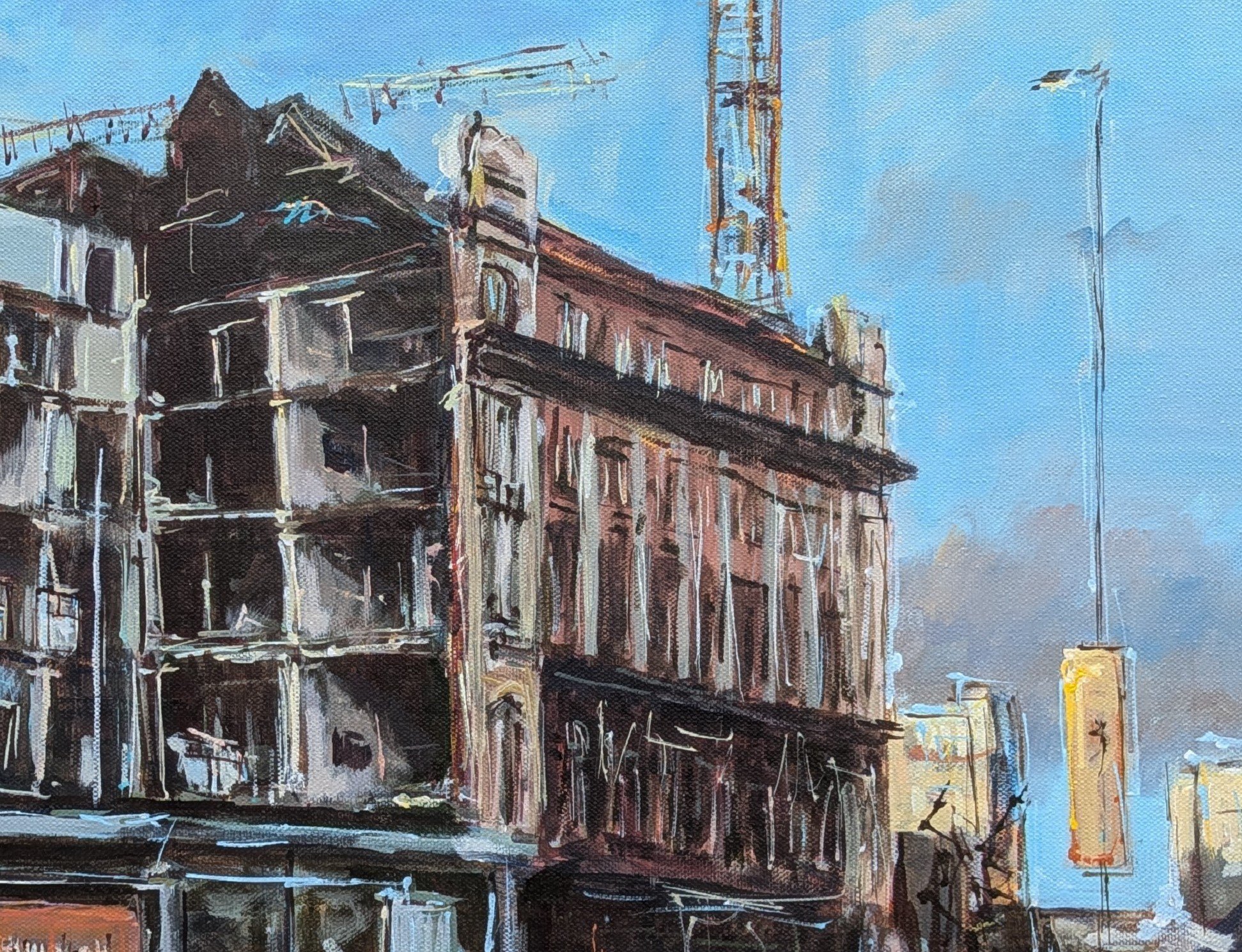
Exposed Beams (detail) / 81cm x 61cm / Acrylic on Canvas / 2026
The reason all this is on my mind currently is I have been working on the above painting of the old Orpheus Building, which housed most of the fine & applied arts when I was there. The lens based students were banished to a cupboard in the attic, while the painters had their gloriously lit ballroom with its sprung floor. The painting is based on some photos I took during the old buildings demolition in 2016.
